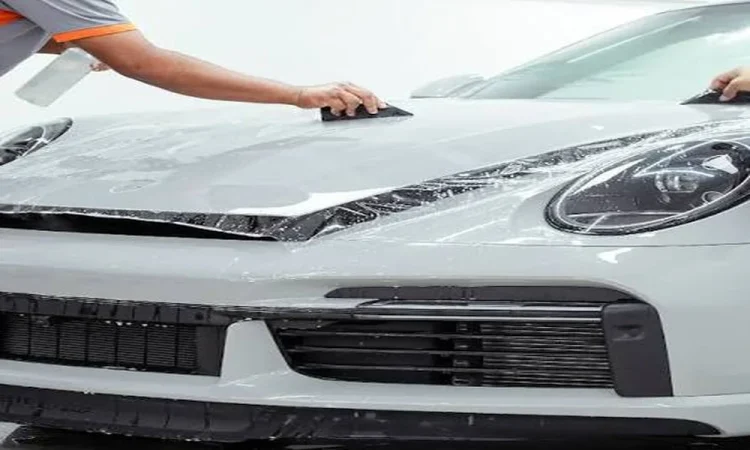
The best compliment a clear protection film can receive is silence. When a customer collects their car and cannot tell where the film starts and the paint ends, the product has done its first job. When the same customer returns two years later and the film is still invisible, it has done its second.
That invisibility is harder to achieve than it looks. Clear film sits directly over the paint the owner chose, often a colour they paid extra for. Any haze, texture or discolouration in the film changes how that paint looks. Much of the difference between a film that stays invisible and one that becomes noticeable is decided at the production stage.
Optical Clarity Is the Starting Point
A clear film should transmit light without scattering it. When light scatters inside a material, the result is haze, a faint cloudiness that makes paint look less vivid. On dark colours and metallic finishes, even a small amount of haze can be visible.
A careful paint protection film manufacturer controls clarity through raw material selection, precise processing and clean production conditions. Contamination such as dust or tiny gels in the material can create visible specks. Consistent processing keeps the film uniform across its width.
For buyers, the simplest test is visual. Place a sample over a dark panel next to an unprotected area and look under bright light from several angles. The difference, if any, is usually obvious.
Surface Texture: The Orange Peel Problem
Clear films can have a slight surface texture that resembles the skin of an orange. Under strong reflections, this texture makes the surface look bumpy rather than glass-smooth.
Some texture is inherent in many films, but the best products minimise it. The smoothness of the top coat and the way it is applied play a large role. When film is installed over high-quality factory paint, any added texture is especially noticeable, so this is a key area for comparison.
Resistance to Yellowing
Earlier generations of protection film earned a reputation for turning yellow over time, particularly on white and light-coloured cars. This was largely due to materials and adhesives that broke down under UV exposure.
Modern films use improved polymers and stabilisers that resist this process far better. However, performance still varies between products. Good producers test for yellowing using accelerated weathering and real-world exposure, and many include yellowing in their warranty coverage.
Asking how a film has been tested for discolouration, and whether this is covered, is one of the most useful questions a buyer can raise.
A Top Coat That Earns Its Place
The top coat is the outermost layer and has a major influence on long-term appearance.
Self-healing
A well-formulated top coat allows fine scratches from washing or light contact to soften with heat. This keeps the film looking clear rather than gradually developing a web of swirl marks.
Stain resistance
Bird droppings, insect residue and tree sap can mark weaker coatings. A strong top coat resists staining and allows contaminants to be removed more easily.
Gloss level
For gloss clear film, the top coat should provide a high, even shine that matches or enhances the paint beneath it.
Adhesive That Is Invisible Too
Clarity is not only about the film layer. The adhesive must also be optically clear. A cloudy or uneven adhesive can create visible patches or lines once the film is installed.
The adhesive also determines how the film behaves during installation and removal. Installers need to position and reposition film using slip solution, then have it bond securely as moisture escapes. Years later, the adhesive should release without lifting paint or leaving heavy residue.
Getting all of this right requires careful formulation and consistent application during production.
Thickness and Consistency
Clear films are typically produced within a specific thickness range. Thicker films offer more impact protection but can be harder to stretch around complex shapes. Thinner films are easier to install but may offer less protection.
What matters most is consistency. Thickness that varies across a roll or between batches can create distortion and installation difficulties. Producers with strong quality control monitor this closely.
Installer-Friendly Behaviour
A film that looks perfect in a laboratory but is difficult to install will not deliver good results on cars. Good producers design films with installers in mind.
That means predictable stretch, good conformability around curves, adhesive that allows repositioning, and a release liner that peels smoothly. It also means consistent behaviour from roll to roll so installers can develop reliable technique.
Width Options and Panel Coverage
Clear film is supplied in different widths. Wider rolls allow large panels like bonnets, roofs and doors on bigger vehicles to be covered in a single piece without seams. A producer offering a practical range of widths helps installers avoid visible joins, which is a large part of keeping film invisible.
Support and Accountability
Getting the product right is only part of the picture. Clear warranty terms, responsive support and honest communication about product changes all contribute to a strong reputation.
Installers and distributors benefit from technical guidance, training and access to information about how films perform over time. When issues do arise, a producer willing to investigate and resolve them fairly builds long-term trust.
How Buyers Can Judge Clear Film
Compare samples side by side over dark paint in good light. Look for haze, texture and any colour tint. Ask about yellowing resistance and how it is tested. Ask how the self-healing top coat performs. Request information on adhesive performance and removal. Speak to installers about how the film handles and how it ages.
These checks take a little time, but they reveal much more than marketing claims.
Invisible for the Right Reasons
Clear protection film is one of the few automotive products where success means not being noticed. Achieving that requires attention to clarity, texture, durability, adhesive quality and consistency, all of which begin in production.
For owners, the reward is simple: a car that looks exactly as it should, protected in a way nobody can see. For installers, it is fewer callbacks and more confidence that the work they deliver today will still look right years from now.