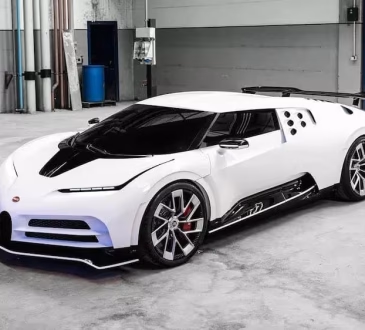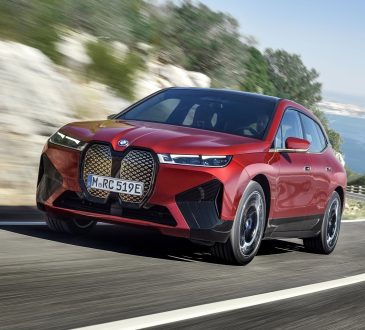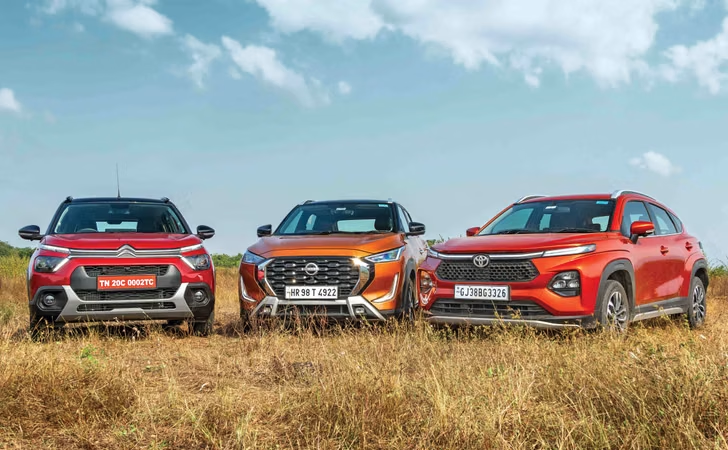
Car sizes are classified into categories—subcompact, compact, midsize, full-size, and more—based on interior volume, length, and wheelbase. Utilizing a car size comparison helps you compare vehicles apples-to-apples and pick the right size for your lifestyle without getting buried in spec sheets. This is especially helpful when deciding between a large crossover and a traditional full-size SUV.
Below is a clear breakdown of every car category, real-world dimensions, and popular examples so you know exactly what you’re getting before you ever sit in a test drive.
Car Size Categories: At a Glance
|
Size Class |
Typical Length |
Passengers |
Cargo Space |
Typical Use |
|
Microcar / City Car |
Under 3.5 m |
2-4 |
Very limited |
Urban commuting |
|
Subcompact |
3.8 – 4.2 m |
4-5 |
Small |
City + light highway |
|
Compact |
4.2 – 4.6 m |
5 |
Moderate |
Daily driving, families of 2-3 |
|
Midsize |
4.6 – 4.9 m |
5 |
Good |
Family car, road trips |
|
Full-Size / Large |
4.9 – 5.3 m |
5-6 |
Excellent |
Maximum comfort, long trips |
|
Compact SUV / Crossover |
4.2 – 4.5 m |
5 |
Good |
Family utility, moderate towing |
|
Midsize SUV |
4.5 – 4.9 m |
5-7 |
Large |
3-row capability, families |
|
Full-Size SUV |
4.9 – 5.5 m |
7-9 |
Very large |
Max passengers, towing |
|
Pickup Truck (Full-Size) |
5.0 – 5.9 m |
5-6 |
Truck bed |
Work, towing, hauling |
|
Minivan |
4.7 – 5.2 m |
7-8 |
Massive |
Large families, road trips |
Sedan Size Comparison: Popular Models Side by Side
|
Model |
Class |
Length |
Width |
Wheelbase |
Trunk (L) |
|
Hyundai i10 |
Microcar |
3,665 mm |
1,683 mm |
2,385 mm |
252 L |
|
Honda Fit / Jazz |
Subcompact |
3,999 mm |
1,694 mm |
2,530 mm |
354 L |
|
Toyota Corolla |
Compact |
4,630 mm |
1,780 mm |
2,700 mm |
371 L |
|
Honda Accord |
Midsize |
4,893 mm |
1,862 mm |
2,830 mm |
473 L |
|
Toyota Camry |
Midsize |
4,885 mm |
1,840 mm |
2,825 mm |
428 L |
|
Chrysler 300 |
Full-Size |
5,046 mm |
1,902 mm |
3,052 mm |
462 L |
SUV Size Comparison: From Compact to Full-Size
|
Model |
Class |
Length |
Width |
3rd Row? |
Cargo (behind 2nd row) |
|
Kia Seltos |
Compact SUV |
4,370 mm |
1,800 mm |
No |
433 L |
|
Toyota RAV4 |
Compact SUV |
4,600 mm |
1,855 mm |
No |
580 L |
|
Hyundai Santa Fe |
Midsize SUV |
4,785 mm |
1,900 mm |
Optional |
625 L |
|
Kia Telluride |
Midsize SUV |
4,995 mm |
1,945 mm |
Yes (3-row) |
547 L |
|
Ford Explorer |
Midsize SUV |
5,050 mm |
2,004 mm |
Yes (3-row) |
592 L |
|
Chevrolet Suburban |
Full-Size SUV |
5,589 mm |
2,057 mm |
Yes (3-row) |
765 L |
How to Choose the Right Car Size
This is where people overthink it. Use these simple filters:
- City driving only: Subcompact or compact. Parking in tight spots weekly gets exhausting in a larger car
- Family of 4 with regular highway trips: Compact to midsize sedan, or a compact SUV
- Family of 5+ needing space: Midsize SUV with 3-row or minivan – minivans give more interior space per dollar than any SUV
- Frequent towing or heavy hauling: Full-size pickup or full-size SUV
- Maximum fuel efficiency: Subcompact or compact, ideally hybrid
- Parking in urban areas: Anything over 4.7 m gets painful – go compact
The Size vs. Fuel Economy Trade-Off
|
Class |
Typical MPG (Non-Hybrid) |
Typical MPG (Hybrid) |
|
Subcompact |
30-38 mpg |
42-52 mpg |
|
Compact |
27-35 mpg |
38-50 mpg |
|
Midsize Sedan |
25-32 mpg |
35-48 mpg |
|
Compact SUV |
24-30 mpg |
35-42 mpg |
|
Midsize SUV |
20-27 mpg |
30-38 mpg |
|
Full-Size SUV |
14-20 mpg |
18-24 mpg |
|
Full-Size Pickup |
13-20 mpg |
20-24 mpg (hybrid) |
One Practical Note on Dimensions
Exterior length doesn’t tell the whole story. A compact SUV like the RAV4 can have more usable cargo space than a midsize sedan because of its vertical loading area. Always check:
- Cargo volume in liters behind the rear seats
- Cargo volume with rear seats folded
- Maximum cargo floor length (especially for flat-loading bicycles, furniture, etc.)
- Hatch opening width and height – some SUVs have narrow rear openings despite large stated volumes
Final Thought
Bigger isn’t always better – it’s about fit. A compact SUV handles 90% of what a full-size SUV does, at significantly lower fuel cost and much easier parking. The sweet spot for most buyers in 2025 is the compact or midsize SUV range, balancing utility, efficiency, and livability.
Use the tables above to shortlist based on length and cargo, then test drive the actual car. Dimensions on paper and the feel of a car in real life are always two different conversations.